The Koutoubia Mosque is an iconic landmark located in Marrakech, Morocco. With its towering minaret, intricate architecture, and rich history, the Koutoubia Mosque has become a popular tourist attraction and a symbol of Morocco’s cultural heritage. In this article, we will explore the history, architecture, and significance of this magnificent mosque in Marrakech.
History of Koutoubia Mosque
The Koutoubia Mosque was built in the 12th century during the reign of the Almohad Caliphate. The mosque was commissioned by Caliph Abd al-Mu’min, who wanted to establish a grand mosque that would rival the mosques of his contemporaries in Seville and Cordoba. The construction of the mosque was completed in 1199, and it has since undergone several renovations and restorations over the centuries.
The architecture of Koutoubia Mosque
The architecture of Koutoubia Mosque is a stunning blend of Islamic, Berber, and Moorish styles. The mosque features a rectangular prayer hall with a flat roof and a central courtyard. The prayer hall is flanked by two smaller rooms, which were used for ablution and prayer preparation. The mosque is built entirely of red sandstone, and its walls are adorned with intricate carvings and geometric patterns.
The Minaret of Koutoubia Mosque
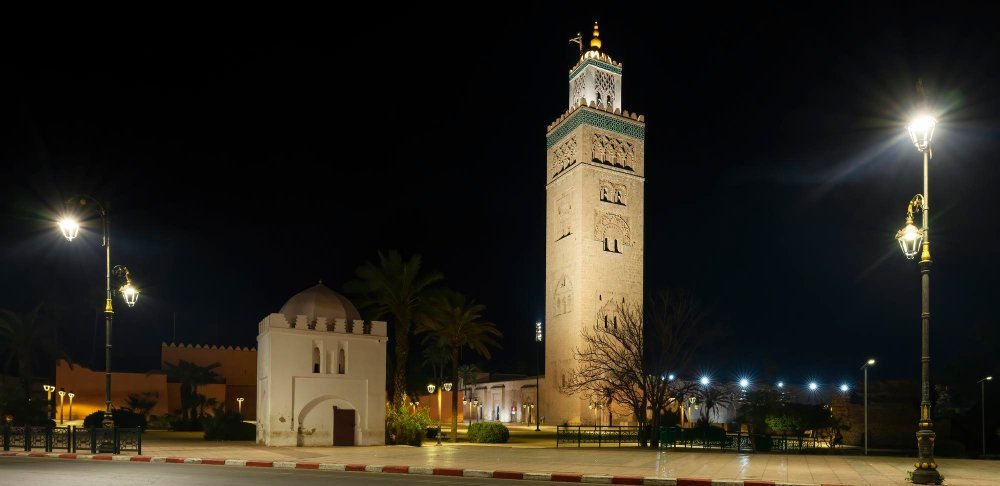
The minaret of Koutoubia Mosque is the most striking feature of the mosque. Standing at 77 meters tall, it is the tallest minaret in Marrakech. The minaret is decorated with intricate carvings and ornamental designs, and it is topped with a spire and a crescent moon. The minaret was used as a model for the Giralda Tower in Seville and the Hassan Tower in Rabat.
Significance of Koutoubia Mosque
The Koutoubia Mosque has significant historical and cultural significance in Morocco. It was not only a religious center but also a hub for intellectual and artistic pursuits. The mosque’s library was renowned for its collection of manuscripts and books, and it was a center for scholars and intellectuals. The mosque also played a vital role in the spread of Islam in North Africa and Andalusia.
Islamic Culture in Koutoubia Mosque
Islamic culture is an integral part of the Koutoubia Mosque. The mosque is not only a place of worship but also a center for community events and gatherings. The mosque hosts various events throughout the year, such as lectures, recitals, and religious festivals. Islamic art and calligraphy can be found throughout the mosque, and its architecture reflects Islamic principles and values.
The Koutoubia Mosque Today
The Koutoubia Mosque continues to be a center of worship and cultural significance in Morocco. It is still used for daily prayers, Friday congregational prayers, and other religious ceremonies. The mosque is also a popular tourist destination and attracts visitors from all over the world who come to marvel at its architecture and learn about its rich history and cultural significance.
How to Visit Koutoubia Mosque
The Koutoubia Mosque is located in the heart of Marrakech and is easily accessible by public transportation. Visitors can take a taxi or a bus to reach the mosque. Non-Muslim visitors are not allowed inside the mosque during prayer times, but they can visit the mosque’s courtyard and admire its architecture from the outside.
The Best Time to Visit Koutoubia Mosque
The best time to visit the Koutoubia Mosque is early in the morning or late in the afternoon when the weather is pleasant, and the crowds are smaller. The mosque is especially beautiful during sunset when its minaret is illuminated and casts a golden glow over the surrounding area.
Interesting Facts about Koutoubia Mosque
- The Koutoubia Mosque was originally named the Mosque of Books (Jamaa al-Koutoubiyyin) because of the nearby book market.
- The mosque’s minaret was used as a watchtower by the Almohad soldiers to monitor the surrounding area for potential threats.
- The mosque’s call to prayer is broadcasted via loudspeakers, which can be heard throughout the city of Marrakech.
- The mosque was featured in the 1956 film “The Man Who Knew Too Much” by Alfred Hitchcock.
The Role of Koutoubia Mosque in Moroccan Society
The Koutoubia Mosque has played a significant role in Moroccan society throughout its history. It has been a center for religious, cultural, and intellectual pursuits and has played a vital role in the spread of Islam in North Africa and Andalusia. The mosque continues to be a symbol of Morocco’s cultural heritage and a source of pride for the Moroccan people.
Koutoubia Mosque and its Surrounding Areas
The Koutoubia Mosque is located in the heart of Marrakech, near other popular tourist attractions such as the Jemaa el-Fnaa Square and the Saadian Tombs. Visitors can explore the surrounding areas and enjoy the vibrant culture and rich history of Marrakech.
Koutoubia Mosque and its Influence on Moroccan Art and Literature
The Koutoubia Mosque has had a significant influence on Moroccan art and literature. Its architecture and design have inspired many artists and writers, and its cultural significance has been celebrated in literature and poetry.
Koutoubia Mosque and its Importance in the Islamic World
The Koutoubia Mosque is not only important in Moroccan history and culture but also in the Islamic world. Its architecture and design reflect Islamic principles and values, and its library was renowned for its collection of Islamic manuscripts and books. The mosque’s significance in the spread of Islam in North Africa and Andalusia cannot be overstated.
Last but not least
The Koutoubia Mosque is a remarkable example of Islamic architecture and a symbol of Morocco’s cultural heritage. Its rich history, stunning design, and cultural significance make it a must-visit destination for anyone interested in Islamic culture and history.
FAQs
Yes, the mosque is open to non-Muslim visitors, but they are not allowed inside during prayer times.
The best time to visit is early in the morning or late in the afternoon when the crowds are smaller.
No, visitors are not allowed to climb the minaret of the mosque.
The Koutoubia Mosque has played a significant role in Moroccan society throughout its history as a center for religious, cultural, and intellectual pursuits.
The Koutoubia Mosque’s library was renowned for its collection of Islamic manuscripts and books and played a vital role in the spread of Islamic knowledge and scholarship.