
What if you could practice a new language with a virtual tutor anytime, anywhere? The dream of fluent conversation is closer than you think, thanks to modern technology.
This review provides a clear, factual look at a leading platform in this space. We cut through the hype to see if its features deliver real results for your goals.
Mondly offers access to over 41 languages. It uses augmented reality and AI chatbots to create interactive lessons. This tech-forward approach aims to make learning new language skills more engaging.
Our analysis will cover functionality, pricing, and effectiveness for different learners. We examine both strengths and weaknesses based on testing. This helps you decide if it’s the right investment for your language journey.
Key Takeaways
- This is an in-depth review of a comprehensive language learning platform.
- Mondly stands out with innovative tech like AR and AI conversation partners.
- It provides lessons for over 41 different languages, offering great versatility.
- The review offers a balanced look at pros and cons to inform your decision.
- We assess if the app fits various learning styles and specific goals.
- The focus is on providing clear information for a potential purchase.
- The structure covers basic features to advanced tools and comparisons.
What is Mondly?
At its core, this application represents a tech-forward approach to mastering new languages with consistency. Founded in 2014 by Romanian entrepreneurs Alex and Tudor Iliescu, the platform aimed to make language acquisition accessible through smart technology.
The tool gained significant institutional backing when education giant Pearson acquired it in 2020. This move added credibility to its innovative methodology within the competitive landscape of language apps.
The system focuses on teaching practical, conversational phrases needed for real situations. Users learn vocabulary for ordering food, booking hotels, or making small talk. This practical approach prioritizes immediate usability over theoretical grammar.
Each daily session typically takes just five to ten minutes of your time. This bite-sized format encourages regular practice without overwhelming learners. The structured path promises to help dedicated users reach an upper-intermediate B2 level in their chosen language.
What truly sets this platform apart is its emphasis on technological innovation. It incorporates augmented reality, virtual reality, and AI-powered features to create immersive experiences. These tools simulate real conversations and environments for practical skill development.
You can access the courses through multiple channels. Mobile apps are available for both Android and iOS devices. A web version also supports learning from desktop computers, offering flexibility in how and where you study.
The application has earned recognition from major tech organizations. It received awards like Best New App and App of the Year from Apple, Google Play, and FbStart. These accolades highlight its standing in the digital education space.
Rather than drilling grammar rules, the methodology builds competency through repeated application. Users engage with vocabulary and phrases in various interactive contexts. This helps develop intuitive understanding and conversational confidence.
In summary, Mondly positions itself as a modern solution in the language learning market. It prioritizes engagement, practical application, and technological integration to make the process more effective and enjoyable for users worldwide.
How Mondly Works: The Core Learning Approach
The platform’s effectiveness stems from a carefully designed daily routine that builds language skills through consistent, bite-sized engagement. This method transforms short, frequent sessions into measurable progress over time.
Each component of the system works together to develop different aspects of language competency. The approach balances repetition with variety to maintain user interest while reinforcing new material.
Daily Lessons for Consistent Practice
Commitment to regular practice forms the foundation of this methodology. The app structures learning around brief daily sessions lasting just five to ten minutes.
This manageable time commitment encourages users to return each day without feeling overwhelmed. Consistency becomes a natural habit rather than a chore.
Each daily lesson follows a recommended path that builds on previously covered material. This progressive structure reinforces retention through strategic repetition. Users encounter familiar words and phrases in new contexts to deepen understanding.
Variety of Interactive Exercises
The platform prevents monotony by rotating through multiple exercise formats. Users might match words with corresponding images to build vocabulary associations.
Translation exercises present sentences in your native language for conversion into your target language. Fill-in-the-blank activities test comprehension of grammatical structures within context.
Listening comprehension drills feature native speaker audio to train your ear. This variety ensures each session works multiple language skills: reading, writing, listening, and eventually speaking.
The combination of different methods engages various learning styles within the same platform. Visual learners benefit from image matching, while auditory learners focus on audio exercises.
Speech Recognition for Pronunciation
Pronunciation training receives special attention through advanced technology. The app’s speech recognition system requires users to speak answers aloud during certain exercises.
This feature won’t recognize incorrect pronunciation, forcing you to adjust your articulation. Immediate feedback helps correct accent and intonation issues from the beginning.
A hands-free learning option provides audio-only lessons for convenient practice. You can use this during commutes or other situations where visual engagement isn’t possible.
Each lesson concludes with a comprehensive recap section. This review highlights new vocabulary and provides performance statistics to track your progress.
The core learning approach combines consistency, variety, and practical application effectively. Short daily lessons build habits, diverse exercises maintain engagement, and speech technology ensures proper pronunciation. This balanced methodology creates a sustainable routine for language acquisition.
Key Features That Set Mondly Apart
Beyond basic vocabulary drills, this platform distinguishes itself through a suite of cutting-edge technological tools designed to simulate real-world language use. These innovative capabilities address the common gap between studying a language and actually speaking it.
The application integrates several unique features that you won’t find in most traditional learning apps. This approach caters to different preferences and learning situations.
The AI-Powered Chatbot for Conversation Practice
One standout feature is the artificial intelligence conversation partner. This chatbot simulates realistic dialogues on practical topics.
You can practice ordering food, checking into a hotel, or making small talk. The system provides suggested responses to keep the exchange flowing naturally.
For more advanced users, there’s an option to type custom phrases. The speech-to-text functionality gives immediate feedback on your pronunciation.
This creates safe, repetitive practice for real conversations. It builds confidence before you speak with actual native speakers.
Augmented Reality (AR) and Virtual Reality (VR) Experiences
The platform pushes immersion further with visual technologies. The augmented reality component requires a separate application.
It projects a computer-generated teacher into your actual surroundings through your phone’s camera. This virtual instructor teaches vocabulary by placing labeled objects in your real environment.
The virtual reality experience is even more immersive. It places you inside simulated settings like restaurants or hotel lobbies.
Here, you practice conversations with virtual characters. This VR component currently requires an Oculus headset for full functionality.
Gamified Quizzes and Monthly Challenges
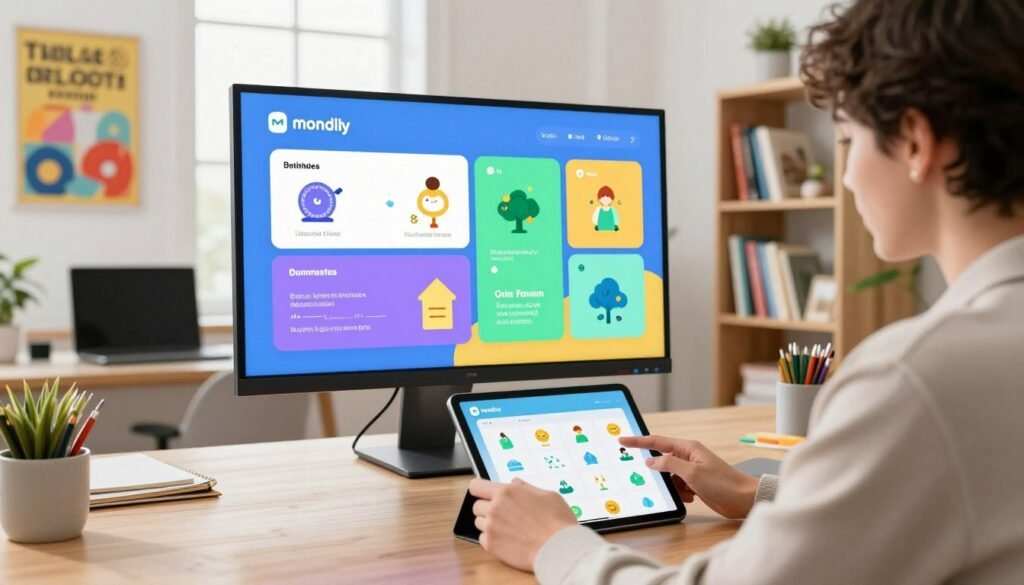
To maintain motivation, the system incorporates game-like elements. Weekly review quizzes test your retention of recent lessons.
Monthly challenges unlock after consistent daily use. These create a progression system similar to video games.
Competitive elements include points, badges, and dual leaderboards. You can see both global rankings and how you stack up against friends.
This achievement system rewards regular engagement. It turns language acquisition into a compelling daily habit.
Mondly Kids and Mondly for Business
The platform also offers specialized versions for different audiences. Mondly Kids is a separate application designed for children.
It uses colorful illustrations, engaging sounds, and themed learning pathways. The content is age-appropriate for younger learners.
Mondly for Business serves corporate clients like Delta Airlines and Canon Medical. This version includes a dashboard for tracking employee progress.
It provides access to all 41 languages for team training. Companies use it for workforce development and preparation for international assignments.
These diverse features demonstrate how one language app can serve multiple needs. From children to business professionals, the technology adapts.
The combination of AI, immersive tech, and gamification sets this platform apart. It moves beyond textbook methods into experiential learning.
The Advantages of Using Mondly
Several key benefits make this language app stand out in a crowded market of educational tools. These advantages combine to create a versatile platform with broad appeal for different types of learners.
The value proposition extends beyond basic vocabulary drills. It incorporates flexible pathways and cutting-edge technology.
Excellent Value for Access to 41+ Languages
The pricing structure offers excellent value compared to many competitors. A monthly subscription costs $9.99, while the annual plan reduces this to $47.99 per year.
This single fee grants complete access to all available courses. You can explore any of the 41+ mondly languages without additional charges.
Many competitors charge similar prices for just one target language. The lifetime access option, often discounted to $99.99, represents exceptional long-term value.
This approach makes learning new skills financially accessible. Users can switch between different languages as their interests evolve.
Innovative Tech Features Keep Learning Engaging
The platform’s technological features prevent the boredom common in repetitive study. Augmented and virtual reality create immersive experiences that feel like play.
These tools simulate real-world environments for practical application. You practice conversations in virtual restaurants or hotels.
This innovative approach maintains user interest through novelty. The tech transforms routine drills into engaging adventures.
The AI chatbot provides safe conversation practice anytime. These features represent a significant advancement over traditional textbook methods.
Flexible Learning Path and “Language Laddering”
The learning path adapts to individual preferences rather than forcing linear progression. Users choose themed lessons based on specific interests or immediate needs.
This flexibility accommodates diverse learning styles effectively. You can focus on vocabulary relevant to travel, business, or social situations.
The unique “language laddering” feature represents a major advantage. It enables learning any language through any other language offered on the platform.
Polyglots can study Spanish through French or Japanese through Korean. Non-native English speakers aren’t forced to use English as an intermediary.
This system opens learning options to a much wider global audience. The practical phrases taught have immediate real-world utility.
You learn how to order food or ask for directions, not theoretical sentences. This practical focus accelerates usable competency.
These advantages combine to create an accessible, engaging platform. The value, innovation, and flexibility work together for effective skill development.
Potential Drawbacks and Limitations
Despite its technological innovations, this application has several notable shortcomings that users should consider. A balanced review requires examining what the platform doesn’t do well alongside its strengths.
These limitations affect different types of learners in various ways. Understanding them helps set realistic expectations for your language journey.
Limited Grammar Instruction and Explanations
The platform takes a “learn by doing” approach with minimal direct teaching. It expects users to pick up grammatical rules through repetition rather than clear explanation.
This method works for simple sentence structures. It becomes problematic with complex grammar systems.
Languages like German with cases or Spanish with intricate verb conjugations need proper instruction. Users can end up guessing why certain forms are correct.
The app provides little context about grammatical things like tense usage or sentence structure rules. This leaves a knowledge gap for serious learners.
Lacks Depth for Intermediate and Advanced Learners
The content primarily targets beginner levels with tourist-focused vocabulary. It doesn’t adequately progress to intermediate or advanced material.
This creates a ceiling for those wanting to achieve fluency. The lessons often remain at a basic level.
You won’t find complex tenses, nuanced conversations, or professional vocabulary. The platform focuses on practical phrases for travel situations.
Advanced language learning requires authentic materials and cultural context. These elements are largely missing from the platform’s offerings.
Inconsistent Quality Across All Language Courses
Not all 41+ languages receive equal development attention. Popular options like Spanish or French have more polished content.
Less commonly taught languages may feel incomplete or need more work. This leads to varying user experiences depending on your target language.
Specific issues include alphabet switching problems in Arabic courses. Some lessons in less popular languages have awkward translations.
The innovative features can also feel gimmicky over time. Augmented reality exercises become repetitive with similar content.
Chatbot conversations often sound stilted and predictable. They lack the natural flow of real human interactions.
Robotic voices in some exercises diminish the learning value after initial novelty wears off. This affects long-term engagement for regular practice.
In summary, these limitations mean the platform excels at beginner content but has clear boundaries. It cannot serve as a comprehensive solution for achieving advanced proficiency.
The app works well for building basic conversational skills. Serious students will need supplementary resources for grammar instruction and deeper language mastery.
Mondly Pricing: Free vs. Premium Plans
Understanding what each payment option includes helps you make an informed financial decision. The pricing model balances accessibility with premium feature access.
You can start without spending any money. The free tier gives you a taste of the methodology before upgrading.
What You Get with the Free Version
The free version provides limited access to core materials. You receive the introductory “Hello” lesson pack covering basic greetings.
This includes just one chatbot conversation for practice. Daily lessons are available but with restricted content.
Most advanced features remain locked behind the paywall. Speech recognition and immersive AR exercises require a subscription.
A 7-day free trial of Premium gives full access to evaluate everything. This lets you test the complete experience before any payment.
Premium Subscription Tiers and Costs
The monthly plan costs $9.99 per month. This covers only one target language for your study time.
The annual subscription offers better value at $47.99 per year. It frequently goes on sale for even lower prices.
This yearly payment unlocks all 41+ languages on the platform. You can switch between different courses anytime.
The app provides consistent daily lessons regardless of your payment method. Premium users enjoy unlimited chatbot conversations.
All interactive exercises and speech tools become available. This represents solid value compared to many competitors.
Is the Lifetime Access Deal Worth It?
The lifetime access option presents an interesting financial calculation. Its full price is listed at $1,999.99.
This premium cost drops dramatically during frequent sales. You can often purchase it for just $99.99.
At this discounted rate, the deal offers exceptional long-term value. It pays for itself if you use the platform for over two years.
Polyglots benefit most from this one-time payment. You gain permanent access to all current and future language courses.
The monthly plan suits those testing a single language short-term. Annual subscriptions fit serious learners exploring multiple tongues.
Lifetime membership makes economic sense for dedicated students. It removes recurring payments from your budget.
Compare this to other learning apps charging similar prices for just one language. This platform’s all-inclusive approach stands out.
Your choice depends on commitment level and linguistic ambitions. Casual learners might prefer monthly flexibility.
Committed students should consider the annual or lifetime options. These provide the best value for extended study time.
Always start with the free trial to assess the platform’s fit for your goals. Then select the payment tier matching your planned usage.
Mondly vs. The Competition: How It Stacks Up
To see where this platform truly stands, we must measure its methods against other popular language learning apps. Each service has a unique philosophy.
Your choice depends on your goals, budget, and preferred style. This comparison highlights key differences to guide your decision.
Mondly vs. Duolingo: Gamification and Practicality
Duolingo is famous for its addictive, game-like structure. It uses a strict linear path where you unlock lessons in a set order.
This app offers more flexibility. You choose topic-based lessons based on your immediate interests, like travel or business.
The content focus differs greatly. Duolingo sometimes teaches bizarre sentences that lack real-world use.
This platform emphasizes practical phrases you would actually say. You learn how to order coffee or ask for directions.
Pricing is a major differentiator. Duolingo remains completely free with ads, making it accessible to everyone.
The free version here is very limited. You need a Premium subscription for full functionality and all conversations.
Both apps use gamification, but differently. Duolingo relies on streaks and leagues.
This service uses weekly quizzes and monthly challenges. It gives you more control over your daily practice routine.
Mondly vs. Babbel: Structure and Depth
Babbel takes a more academic approach to language learning. Its lessons are heavily focused on grammar and sentence structure.
This app prioritizes conversational skill through repetition and tech. You get less explicit grammar instruction.
Language variety is a clear advantage here. It offers over 41 languages, including many less common ones.
Babbel focuses on about 14 mostly European languages. Its catalog is smaller but often more polished for those specific tongues.
Where Babbel shines is in depth. It provides stronger content for intermediate and advanced learners.
This platform is stronger for beginners and casual students. It excels at building basic conversational confidence quickly.
Babbel’s structure feels like a traditional course. This app feels like a modern, interactive toolkit.
Your choice depends on your goal. For grammar and progression, consider Babbel. For tech innovation and breadth, look here.
Mondly vs. Immersion-Focused Platforms
Platforms like Rosetta Stone or FluentU use full immersion methods. They teach using only the target language from the start.
This approach can overwhelm true beginners. This app allows you to learn through your native language, providing helpful scaffolding.
It offers a gentler introduction to new languages. You build foundational vocabulary before diving into deep immersion.
Content quality differs significantly. Immersion platforms use authentic real-world videos and media.
This service relies on scripted conversations and generated audio. It provides controlled practice rather than authentic exposure.
For cultural context and advanced comprehension, immersion platforms are superior. They connect language learning to real culture.
This app is better suited for establishing basic speaking skills. It prepares you to eventually benefit from immersive content elsewhere.
These other platforms can effectively complement this app’s weaknesses. Use them for grammar, cultural depth, and advanced content.
Choose this platform if you are starting from zero or want flexible, tech-driven practice. Its approach is less intimidating for new learners.
Look to immersion-focused apps once you have a foundation and seek fluency. They provide the challenging, real-world material needed for mastery.
Who is Mondly Best For?
Not every language app suits every learner, making it crucial to identify which user profiles benefit most from this platform’s approach. The right tool matches your specific goals and available time.
This service excels at serving particular types of students effectively. Understanding these profiles helps you decide if it fits your needs.
Absolute Beginners and Casual Learners
Absolute beginners find a gentle introduction here. The short, manageable daily lessons build confidence without overwhelming you.
You start with basic greetings and essential vocabulary. This creates a solid foundation for further study.
Casual learners who want to dabble benefit from the flexible approach. There’s no intense commitment required for consistent progress.
The low-pressure environment makes learning new skills enjoyable. You can explore a language without dedicating hours each day.
Travelers Needing Practical Phrases
Travelers receive immediate value from the focused content. The app teaches phrases you’ll actually use abroad.
You learn how to order food, ask for directions, and check into hotels. These real-world situations prepare you for trips.
The conversational practice builds speaking confidence quickly. You’ll feel ready to handle common travel interactions.
This practical way of learning skips theoretical grammar. It focuses on what you need to communicate effectively.
Polyglots and Non-Native English Speakers
Polyglots appreciate the unique language laddering feature. This allows learning any language through any other offered language.
You could study Spanish through French or Japanese through Korean. This flexibility is rare in the market.
Non-native English speakers benefit from diverse base language options. Many apps assume English as your starting point.
This platform accommodates speakers of many native tongues. It opens learning opportunities to a global audience.
Visual and tech-oriented learners enjoy the innovative features. Augmented reality and interactive exercises engage multiple senses.
These tools make practice feel like play rather than study. They maintain interest through novelty and immersion.
Busy professionals benefit from the short daily lessons. The five to ten minute format fits into tight schedules.
Consistency becomes achievable even with limited time. You can practice during commutes or brief breaks.
Children have a specialized version called Mondly Kids. It uses colorful illustrations and age-appropriate content.
Corporate teams use Mondly for Business for workforce development. Companies like Delta Airlines train employees with it.
Users interested in multiple things find value in the pricing model. One subscription unlocks all 41+ languages.
This beats per-language pricing common elsewhere. You can switch between courses as interests change.
In summary, this platform serves beginners, travelers, and polyglots best. Its strengths align with building basic conversational skills quickly.
The tech features and flexible approach suit casual and visual learners. Busy people and global speakers also benefit significantly.
Mondly also works well for those exploring multiple tongues. It provides a cost-effective entry point to language study.
Who Might Want to Consider Other Apps?
Identifying who should look elsewhere is just as important as finding the right fit for your learning style. This platform excels with specific profiles but falls short for others.
Certain goals require different tools. Knowing these mismatches saves you time and frustration.
Your investment should match your ambitions. Let’s explore when alternative resources make more sense.
Learners Seeking Grammar-Focused Instruction
This app takes a learn-by-doing approach. It provides minimal explicit grammar explanations.
You pick up rules through repetition rather than clear teaching. This works for simple sentence structures.
Complex grammar systems need proper instruction. Languages with cases or intricate conjugations become confusing.
You might guess why certain forms are correct. The platform leaves a knowledge gap for serious students.
Consider Babbel, Busuu, or traditional textbooks instead. These offer structured grammar lessons.
They provide detailed linguistic explanations. This foundational understanding supports advanced learning.
Students Aiming for Advanced Fluency
The content primarily targets beginner and intermediate levels. It focuses on tourist vocabulary and practical phrases.
There’s a clear ceiling for those wanting true fluency. The lessons don’t progress to complex language structures.
You won’t find nuanced conversations or professional vocabulary. The platform lacks depth for serious mastery.
Consider immersion platforms or advanced courses for higher goals. Conversation practice with native speakers is essential.
Professional proficiency requires authentic materials. These resources provide the challenging content needed.
Those Prioritizing Cultural Context and Real-World Media
This service focuses on practical phrases without cultural nuances. It doesn’t cover regional variations or social conventions.
The learning experience feels somewhat sterile. You miss the connection between language and culture.
Scripted content replaces genuine native materials. The audio lacks authentic regional accents and expressions.
Consider FluentU, Lingopie, or authentic media consumption instead. These platforms use real videos, shows, and articles.
They teach language through cultural immersion. You learn how people actually speak in different contexts.
Specialized vocabulary needs also point elsewhere. Business, academic, or technical terms require targeted resources.
This app’s general conversational focus has limits. You need industry-specific courses for professional use.
Perfectionists might notice inconsistencies across language courses. Some less popular options feel less polished.
Technological imperfections can frustrate detail-oriented learners. The experience varies depending on your target language.
Recognizing these limitations helps you make informed decisions. Your specific priorities should guide your choice.
The right tool accelerates your progress. Choose based on your unique language learning map and timeline.
Conclusion: Is Mondly Worth Your Time and Money?
Your decision to invest in any educational tool should be based on how well it aligns with your specific goals and learning style.
This language app excels at introducing beginners to a new language through practical conversations. Its strengths include access to 41+ languages, flexible daily lessons, and innovative tech features.
However, Mondly has clear limits. It lacks grammar instruction and plateaus at intermediate levels. The platform works best for travelers, polyglots, and casual learners building basic skills.
For serious fluency, combine it with grammar resources and real practice. The lifetime access deal offers excellent value for dedicated students. Try the free version first to see if Mondly fits your language learning map.
FAQ
How much does the Mondly app cost?
You can start learning for free with limited daily content. For full access, a Premium subscription starts at .99 per month. They often offer a lifetime access deal for a one-time payment, which can provide excellent long-term value for learning multiple languages.
Is Mondly good for beginners?
Yes, it’s an excellent tool for beginners. The app focuses on core vocabulary and practical sentences from day one. Its speech recognition and chatbot features help new learners build confidence in speaking and understanding basic conversations quickly.
Can I use Mondly to learn more than one language at a time?
Absolutely. The platform supports “language laddering,” where you can study a new language using one you already know. This is a powerful feature for polyglots, allowing you to learn Spanish from French or German from Italian, for example.
How does Mondly compare to Duolingo?
While both use gamification, Mondly emphasizes practical conversation skills and real-world phrases more heavily from the start. It also offers unique tech like augmented reality and a more advanced AI chatbot for simulated dialogue practice.
What is the best feature of this language learning platform?
Many users find the AI-powered conversation tutor to be the standout feature. It simulates realistic dialogues, providing instant feedback on your pronunciation. The AR and VR modules also offer an immersive, engaging way to practice vocabulary in virtual settings.
Does the app explain grammar rules?
Grammar instruction is limited. The approach is more intuitive, teaching you through pattern recognition in sentences and phrases. If you prefer explicit, in-depth grammar explanations, you might want to supplement with another resource like Babbel.
Is there a version for children?
Yes, Mondly Kids is a separate application designed specifically for younger learners. It uses colorful visuals, fun games, and child-friendly topics to make picking up a new language an enjoyable activity.