
What if every dollar you spent could bring you closer to your next dream vacation? This isn’t just wishful thinking—it’s the reality offered by one of the world’s largest travel loyalty programs.
The United Airlines MileagePlus initiative connects over 100 million members to incredible rewards. Your earned travel credits remain yours forever, as long as your account stays open. This creates lasting value from all your spending and travels.
This carrier operates a massive global network. With 4,500 daily flights to more than 300 cities, your options are virtually limitless. The United Airlines MileagePlus extends even further through key partnerships.
Strategic alliances with 16 airlines and Star Alliance membership let you earn united miles on over 40 different carriers. You can accumulate rewards traveling to almost any destination worldwide. Joining is completely free and takes just minutes.
This ultimate guide provides everything you need to know. We’ll show you how to earn, redeem, and maximize your united miles for maximum value. Let’s begin your journey to smarter travel.
Key Takeaways
- One of the world’s largest frequent flyer programs with over 100 million members
- Your miles never expire as long as your account remains active
- Access to an extensive network of 4,500 daily flights to over 300 cities
- Partnerships with 16 airlines plus Star Alliance membership expand earning opportunities
- Joining the program is completely free and serves as your first step
- This guide covers everything from basic earning to advanced redemption strategies
- The core value proposition remains strong despite recent program updates
What is United MileagePlus?
Think of United Airlines MileagePlus as a vast ecosystem where everyday spending translates into travel freedom. It is the official frequent flyer program for a major U.S. carrier.
With a community exceeding 100 million members, it stands among the planet’s largest loyalty plans. This massive scale offers significant advantages for rewards seekers.
The core of the United Airlines MileagePlus is simple. Members collect mileageplus miles, which act as the program’s flexible currency. You gather these credits through many activities, not just flying.
Primary methods to earn miles include flights on the carrier and its extensive airline partners. Using co-branded credit cards is another powerful method. Everyday shopping and dining with registered partners also boosts your balance.
The main goal is redeeming miles for award flights. You can book travel on United Airlines and its vast partner network. This network is greatly expanded through its Star Alliance membership.
This means your miles work for a global network of destinations. The program has evolved over decades, adapting credit cards and redemption options. It remains relevant for both frequent flyers and those earning through partners.
Grasping these basics is essential. It forms the foundation for building a smart strategy to maximize your travel rewards.
Understanding United Airlines MileagePlus Miles
The real power of any loyalty currency lies in understanding its fundamental value and flexibility. Your accumulated credits are more than just numbers in an account. They represent potential travel experiences waiting to be unlocked.
To use them strategically, you need two key pieces of information. First, know what each mile is worth in practical terms. Second, understand the unique program features that protect and enhance your balance.
The Value of a MileagePlus Mile
Industry analysts provide a crucial baseline for valuation. Recent data suggests these travel credits are worth approximately 1.2 to 1.35 cents per mile.
This figure comes from comparing cash ticket prices to award redemption costs. Experts analyze hundreds of economy routes across various dates. They calculate the average value members receive when they redeem united miles for flights.
You should use this 1.2-cent benchmark as your guide. It helps you identify high-value redemption opportunities. Aim for awards that give you at least this much value for every United Airlines MileagePlus miles you spend.
This approach ensures you get good return on your rewards investment. The value has shown a positive trend over recent years. Strategic redemptions can often yield even higher returns.
Key Program Benefits: No Expiration and Miles Pooling
One of the most valuable features is permanent validity. Your United Airlines MileagePlus miles never expire as long as your mileageplus account remains open and active. This policy provides incredible long-term security for your rewards balance.
You can save for major trips without fear of losing credits. There’s no pressure to use miles before a deadline. This benefit alone makes the program attractive for casual and dedicated travelers alike.
Another powerful tool is the miles pooling feature. This allows families and groups to combine resources effectively. Up to five members can contribute their balances to a shared pool.
Children can be included in these arrangements. Any adult member aged 18 or older can create a pool and act as the leader. Each person can only participate in one pool at a time.
Pooling is far superior to transferring miles between individual accounts. Paid transfers incur steep fees: $7.50 for every 500 miles plus a $30 processing charge. Pooling lets you share miles without these costly penalties.
Remember an important limitation of pooled miles. They can only be redeemed for flights operated by the carrier and its regional partners. You cannot use them for awards on other airline partners or for cabin upgrades.
Understanding these core aspects transforms how you manage rewards. Knowing the baseline value helps you earn miles and spend them wisely. Leveraging permanent validity and pooling maximizes every dollar spent in the program.
This knowledge forms the foundation for all advanced strategies. It ensures you extract maximum value from your participation. Your miles per dollar efficiency improves significantly with this awareness.
How to Earn MileagePlus Miles by Flying
Air travel isn’t just about reaching destinations—it’s a primary engine for earning valuable rewards. Flying on paid tickets provides the most straightforward method to earn miles quickly. This approach works with both the main carrier and its extensive network of collaborators.
Your strategy should focus on two key areas. First, understand how credits accumulate on flights operated by the primary carrier. Second, learn the rules for flights with other carriers in the partnership network. Each has distinct calculation methods.
Earning on United-Operated Flights
The program uses a revenue-based system for its own flights. The total credits you receive depend directly on your ticket price and elite status level. All status tiers above basic membership provide bonus multipliers.
For basic members, the earning rate is fixed at 5 miles per dollar spent on qualifying airfare. This rate increases significantly with higher status. Premier Silver members earn a 40% bonus, resulting in 7 miles per dollar.
The earning scale continues upward through the status tiers. Premier Gold offers a 60% bonus (8 miles per dollar). Premier Platinum provides an 80% bonus (9 miles per dollar). Top-tier Premier 1K members receive an impressive 120% bonus, earning 11 miles for every dollar spent.
Remember these important limitations. You only earn on base airfare and carrier-imposed fees. Government taxes and security fees do not generate any credits. There’s also a maximum cap of 75,000 miles per ticket.
Earning on Partner Airline Flights
The calculation changes when you fly with partner airlines. Your earning method depends on how your ticket was issued. This is a crucial distinction that affects your final credit total.
If your ticket number starts with 016 (issued by the main carrier), you follow the revenue-based system. You’ll earn miles based on your fare cost and your elite status bonus. This applies even when flying on a partner’s aircraft.
When booked directly through a partner carrier, earning switches to a different formula. It typically involves your fare class and the flight distance. Each partner airline has its own specific earning chart. You must consult these charts to know exactly what you’ll receive.
Some partnerships have unique structures. For example, crediting flights from JetBlue’s Blue Sky program follows a spend-based model. You earn credits based on your ticket price, similar to the primary carrier’s system.
Always ensure your loyalty number is attached to every eligible booking. This simple step guarantees you receive all credits you’ve earned. Double-check your reservation details before travel.
Review the official partner airline list for detailed earning charts. These charts show exactly how many credits you get for each fare class and distance combination. This knowledge helps you maximize every trip.
Boost Your Balance with United Co-Branded Credit Cards
Co-branded credit cards transform routine purchases into a steady stream of valuable travel credits. Issued exclusively through Chase Bank, these financial tools offer one of the fastest ways to grow your rewards balance.
Every swipe earns you mileageplus miles that never expire. The right card matches your spending habits and travel goals perfectly.
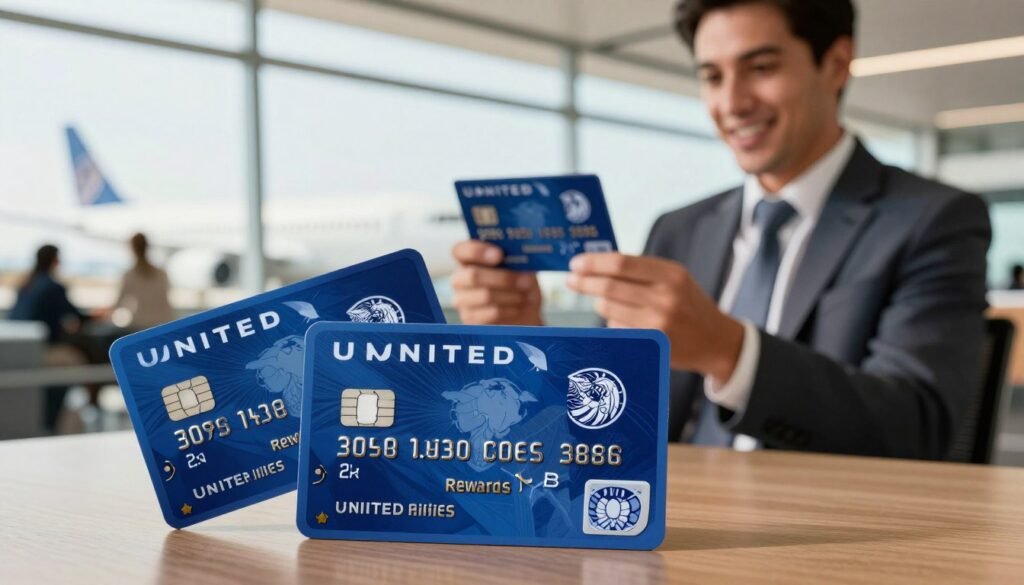
Welcome offers provide a powerful head start. A common promotion delivers 60,000 bonus miles after you spend $3,000 purchases first 3 months account opening. This instant boost can cover a domestic round-trip award.
Card spending also contributes to elite status. Select products earn Premier Qualifying Points (PQP) with your purchases. This creates a dual path to rewards and recognition.
United℠ Explorer Card: Best for Occasional Travelers
This popular credit card is ideal for those who fly a few times each year. It earns 2 miles per dollar spent at restaurants, on hotel stays, and on carrier purchases.
All other spending earns 1 mile per dollar spent. The card delivers excellent everyday value for its moderate annual fee.
Key benefits include a free checked bag for you and a companion on reservations. You also receive two one-time United Club passes annually.
There are no foreign transaction fees, making it great for international trips. The explorer card balances earning power with practical travel perks.
United Quest℠ Card: Enhanced Travel Benefits
Frequent flyers should consider this upgraded option. It offers a $200 annual United TravelBank credit for flight purchases.
You get a 10,000-mile discount on award flights each year. This effectively reduces redemption costs for your trips.
The card provides your first and second checked bags free on reservations. This family-friendly benefit saves significant money over time.
Earning rates are strong: 3x miles on carrier purchases, 2x on travel and dining. It’s designed for travelers seeking maximum flexibility.
United Club℠ Card: Luxury Lounge Access
This premium product targets road warriors and luxury seekers. Primary value comes from unlimited united club airport lounge access.
You and eligible guests can relax in over 45 lounges worldwide. This transforms layovers and flight delays into comfortable experiences.
The card also includes a TSA PreCheck or Global Entry fee credit. You receive your first and second checked bags free on all reservations.
Earning rates are generous: 4x miles on carrier purchases, 2x on travel and dining. The annual fee is higher but justified for regular travelers.
United Business Cards for Company Spending
Business owners have two specialized credit cards to consider. The United℠ Business Card offers solid earning on common expenses.
It provides a free checked bag and priority boarding benefits. The United Club℠ Business Card adds lounge access for company travelers.
Both cards help separate business and personal spending. They also generate rewards from vendor payments and travel costs.
Consider the United Gateway Card for a no-annual-fee entry point. The United MileagePlus Debit Card offers weaker miles per dollar earning rates.
Choose your card based on travel frequency and desired perks. Lounge access, bag fees, and bonus miles offers should guide your decision.
Always review current terms, as benefits and offers change regularly. The right financial partnership accelerates your journey to free travel.
Earning Miles Without Flying: Shopping, Dining, and More
Beyond airport terminals, a world of earning opportunities transforms ordinary purchases into travel credits. You don’t need a boarding pass to build your rewards balance. Everyday spending channels provide consistent mileage accumulation.
These methods are especially valuable for infrequent flyers. They offer a parallel path to accumulating rewards alongside traditional flight earnings. Smart members layer multiple approaches for maximum impact.
MileagePlus Shopping Portal
The program’s online shopping mall connects you with over 1,100 retailers. Simply start your purchase through this portal to activate earnings. You’ll earn miles for every dollar spent at participating stores.
Many merchants offer bonus miles promotions throughout the year. These can significantly boost your accumulation rate. Always check the portal before making any online purchase.
The MileagePlus X mobile app extends this functionality. It provides access to additional in-store offers. Scan your receipt or use linked payment methods to claim your credits.
MileagePlus Dining Program
Link your credit card to this dining rewards network. You’ll then earn whenever you eat at participating locations. Over 11,000 restaurants, bars, and clubs participate nationwide.
Members can earn up to 5 miles per dollar spent at these establishments. Registration is quick and completely free. Your linked card automatically tracks qualified spending.
Some locations offer even higher miles per dollar rates for loyal patrons. The program frequently adds new dining partners. Check their website for current participating spots near you.
Hotel, Car Rental, and Financial Partners
Major hotel chains collaborate with the program to reward your stays. You can often earn united miles through direct bookings. Provide your membership number when making reservations.
Most chains offer 1 to 3 miles per dollar spent on hotel stays. Some provide flat mileage bonuses per completed stay. Vacation rental platform Vrbo also participates in this partnership network.
Car rental agencies like Avis and Budget let you opt for mileage earnings. Car-sharing service Turo is another valuable partner. Even rides with Lyft can contribute to your travel fund.
Financial service providers represent another niche earning channel. Select banks and lenders offer mileage bonuses for new accounts. Some utility companies also participate in this rewards ecosystem.
Remember that buying miles directly is usually poor value. Earning them through daily activities provides much better returns. Always prioritize earning over purchasing credits.
Combine these methods with a co-branded credit card for layered earnings. Use your card at a participating restaurant, for example. This strategy multiplies your rewards from a single transaction.
These non-flight channels are essential for maintaining balance growth. They complement travel-based earning perfectly. Together they create a robust rewards accumulation system.
Your Guide to Redeeming Miles for Award Flights
Booking flights with your rewards represents the most valuable use of your balance. The program offers incredible flexibility across a massive network of carriers.
Understanding the redemption options helps you secure the best deals. You can access seats on dozens of airlines worldwide through your mileageplus account.
Saver Awards vs. Everyday Awards
The program uses a two-tier system for award flights. Saver awards offer discounted pricing but have limited availability.
These discounted seats often range from 5,000 to 12,500 miles for domestic economy. International and premium cabin redemptions follow similar discounted scales.
Select Chase credit cardholders and elite members get exclusive access. They can see expanded Saver award inventory that others cannot.
Everyday awards allow booking any available seat on a flight. This guarantees availability even on last-minute or popular routes.
The cost is significantly higher than Saver level pricing. This flexibility comes at a premium mileage cost.
How to Search and Book Award Travel
Always begin by logging into your mileageplus account on the carrier’s website or app. This ensures you see all available inventory, including exclusive offers.
Use the flexible date calendar to find the best redemption values. This tool highlights dates with Saver award availability across a monthly view.
Consider booking one-way awards for maximum itinerary flexibility. The program allows this without imposing a round-trip penalty.
The Money + Miles option lets you pay with a combination of cash and credits. You’ll earn miles on the cash portion, excluding taxes and fees.
This hybrid approach typically offers poor value at around 1 cent per mile. Standard award bookings do not earn miles or Premier Qualifying Points.
Using Miles on Star Alliance and Partner Airlines
Your rewards work across an extensive network of over 40 carriers. This includes all 25 Star Alliance partners plus additional alliance partners.
This global reach lets you redeem miles for travel to virtually any destination. You can book premium cabins like business class on many international carriers.
Searching for partner awards sometimes requires different approaches. Some partner airlines only release award space through their own websites.
You may need to call the reservations line to confirm availability on certain carriers. Expert travelers often check partner sites first, then contact the program.
This extra effort can unlock incredible redemption opportunities. You might find better availability or lower mileage costs on specific routes.
Mastering these redemption methods maximizes every credit in your balance. Strategic booking turns your rewards into exceptional travel experiences.
Maximize Value: Best Redemption Strategies
The true test of any rewards program lies not in earning miles but in spending them wisely. Your accumulated travel credits represent potential journeys. Turning them into maximum value requires strategic planning.
Always aim for redemptions worth at least 1.2 cents per mile. This benchmark comes from financial analysts. It represents the baseline value for good redemptions.
Many opportunities deliver far greater returns. The key is identifying these sweet spots across the network.
Targeting High-Value Domestic and International Routes
Sweet spot redemptions offer exceptional mileage efficiency. These are flights where your credits work hardest. They often involve premium cabins or last-minute travel.
Long-haul business class on partner carriers is a prime example. A transcontinental U.S. flight might cost just 30,000 miles. Economy tickets to Europe can start around 20,000 miles.
Last-minute flights with high cash prices also provide great value. Your miles cover expensive tickets you wouldn’t purchase with cash. This strategy maximizes every credit in your account.
Flexibility is essential for finding these deals. Use the flexible date calendar when searching for award flights. Consider alternative airports to access more Saver Award space.
When to Use Miles for Cabin Upgrades
Upgrading your seat can return excellent value. Moving to premium economy or a lie-flat bed often exceeds the 1.2-cent benchmark. This approach works well with existing paid tickets.
The upgrade cost depends on your original fare class. Cheaper tickets generally require more miles. Route and availability also affect the final price.
Some upgrades need a cash co-pay alongside miles. Combining miles with PlusPoints can improve your chances. This hybrid approach secures premium cabins efficiently.
Upgrading to United Polaris business class is a popular goal. It delivers luxury travel at a fraction of the cash price. Always calculate your value per mile before committing.
Redemption Options to Generally Avoid
Some choices consistently offer poor returns. Gift cards, merchandise, and hotel stays often yield less than 1 cent per mile. Car rentals and cruises follow this same pattern.
The Money + Miles option typically provides weak value. It calculates around 1 cent per mile spent. Standard award bookings are almost always better.
Using mileageplus miles for lounge memberships is also suboptimal. The cash equivalent rarely justifies the mileage cost. Flight awards deliver superior value.
Follow this simple rule before any redemption. Compare the cash price to your mileage cost using the 1.2-cent valuation. Only proceed when your credits deliver strong returns.
Strategic redemption transforms your balance into memorable journeys. Focus on flight awards and premium upgrades. Avoid low-value alternatives that dilute your rewards.
Understanding United Premier Elite Status
For frequent travelers, achieving elite status transforms the entire journey from stressful to seamless. The Premier program recognizes your loyalty with tangible advantages at every step.
There are four published tiers: Silver, Gold, Platinum, and Premier 1K. An invitation-only Global Services level exists above these. Each tier builds upon the last with increasingly valuable perks.

Benefits include mileage bonuses, seat upgrades, and priority services. You also get complimentary baggage, better award availability, and fee waivers. Understanding these tiers helps you set meaningful travel goals.
Premier Silver: Entry-Level Benefits
Silver status is the gateway to enhanced travel. It offers a solid foundation of practical advantages for regular flyers.
You earn a 40% mileage bonus, resulting in 7 miles per dollar on flights. This accelerates your rewards accumulation significantly. A free checked bag for you and a companion saves money on every trip.
Priority check-in and boarding streamline your airport experience. You also see expanded award seat availability when searching. Silver provides real value without requiring extreme travel frequency.
Premier Gold and Platinum: Enhanced Perks
Gold status delivers a meaningful leap in privileges. You receive all Silver benefits plus important new advantages.
The mileage bonus increases to 60%, earning 8 miles per dollar. You attain Star Alliance Gold status, a game-changer for international travel. This grants lounge access on overseas itineraries and extra baggage allowances on all alliance carriers.
Platinum status raises the bar further. Members enjoy an 80% mileage bonus (9 miles per dollar). Complimentary Economy Plus seating is available at booking for you and companions.
Platinum introduces the exclusive PlusPoints system for upgrades. You also receive automatic Marriott Bonvoy Gold status. These combined benefits reward your substantial travel commitment.
Premier 1K: Top-Tier Privileges
Premier 1K represents the pinnacle of published status levels. It offers the most comprehensive suite of travel enhancements.
You earn the highest mileage bonus at 120%, yielding 11 miles per dollar. This maximizes every flight for rewards earning. The program provides more PlusPoints for upgrade requests compared to Platinum.
Dedicated service lines and priority waitlisting ensure premium support. You receive the highest priority for operational upgrades and standby clearance. Premier 1K recognition signifies exceptional loyalty to the United MileagePlus program.
The value of Star Alliance Gold status cannot be overstated. Attained at Premier Gold and above, it provides benefits across all 26 member airlines. You enjoy lounge access, priority services, and extra baggage worldwide.
The PlusPoints system is a key advantage for Platinum and 1K members. These points confirm upgrades on long-haul flights, including to United Polaris business class. They offer a structured way to secure premium cabin experiences.
Elite status enhances every aspect of travel, from earning more to enjoying greater comfort. It’s a powerful tool for those who fly regularly.
Note that some co-branded credit cards provide similar benefits like free bags. However, full status delivers a comprehensive package unmatched by any single card. Understanding these tiers is crucial for recognizing the true value of your loyalty.
How to Qualify for United Elite Status
The path to elite recognition is paved with Premier Qualifying Points and Premier Qualifying Flights. Gaining elite status requires demonstrating loyalty through both travel frequency and spending.
This dual-track system rewards what matters most to the business: regular flying and revenue generation. Understanding these mechanics is essential for planning your qualification journey.
Premier Qualifying Points (PQP) and Premier Qualifying Flights (PQF)
The program uses two distinct metrics to measure your loyalty. Premier Qualifying Points track how much money you spend with the carrier and partners.
These qualifying points accumulate from your base fare, carrier-imposed fees, and seat purchases. Economy Plus subscriptions, upgrade co-pays, and paid upgrades also contribute.
Flights on Star Alliance partners count when ticketed through the main carrier. Each dollar spent translates directly into your PQP total.
Premier Qualifying Flights measure how often you fly. Each flight segment counts as one PQF toward your threshold.
Basic economy fares present an important limitation. These discounted tickets earn zero PQF, though they still generate PQP based on spending.
This dual requirement ensures status holders are both frequent and valuable customers. You must meet thresholds in both categories or use the PQP-only alternative path.
Earning PQP through Flying and Credit Card Spend
Flying remains the primary method for accumulating premier qualifying points. Every dollar spent on eligible airfare contributes to your total.
The calculation is straightforward: your spending directly converts to PQP at a 1:1 ratio. A $500 flight earns 500 PQP, plus any additional fees for seats or upgrades.
Co-branded financial tools offer a powerful supplementary path. Select products earn PQP through everyday purchases.
Most cards provide 1 PQP for every $20 in general spending. Premium options like the United Club℠ Card offer better ratios.
Some premium cards include annual PQP deposits just for holding the product. The United Quest℠ Card provides a substantial yearly boost.
Even award travel contributes to status qualification. Redeeming miles for flights earns 1 PQP for every 100 miles used.
This creates a pathway for those who accumulate credits through partners. Strategic redemptions can help bridge gaps in your qualification progress.
The Path to Each Status Tier
The program offers four published status levels with clear requirements. Each tier has dual qualification options to accommodate different travel patterns.
For 2025/2026, the thresholds follow this structure:
Premier Silver requires 5,000 PQP plus 15 PQF. The PQP-only alternative demands 6,000 points without flight requirements.
Premier Gold needs 10,000 PQP with 30 PQF. Alternatively, 12,000 PQP alone secures this mid-tier status.
Premier Platinum sets the bar at 15,000 PQP and 45 PQF. The solo path requires accumulating 18,000 qualifying points.
Premier 1K represents the top published tier. It demands 22,000 PQP with 60 PQF or 28,000 PQP independently.
Qualification follows the calendar year. Activity from January through December determines your status for the following year.
Earned status remains valid through January of the second year after qualification. This provides approximately 13 months of benefits from your efforts.
Those holding elite status with other carriers have an additional option. The status match challenge offers a accelerated path to recognition.
This requires flying a set number of segments within 90 days. Successful completion grants equivalent status in the program.
Strategic spending on co-branded cards significantly supplements flight activity. Calculating your projected earnings helps plan your qualification strategy.
Monitor your progress through your online account dashboard. The tracker shows exactly how close you are to each threshold.
Remember that PQP earned through card spending has no cap. This makes financial tools particularly valuable for reaching higher tiers.
Combining flight activity with smart card use creates the most efficient path. This approach maximizes every dollar toward your status goals.
Navigating United’s Star Alliance Partnership Network
Access to 25 international carriers transforms a domestic program into a worldwide travel network. This global reach comes through membership in the star alliance, the planet’s largest airline coalition.
The alliance connects you to over 40 total airline partners. Your rewards work across continents through this carefully structured system.
Key Star Alliance Partners for Earning and Redeeming
Certain star alliance partners offer exceptional value for reward seekers. All Nippon Airways (ANA), Singapore Airlines, and Lufthansa are highly sought-after.
Air Canada, Turkish Airlines, and Swiss also provide excellent redemption options. These united partner airlines expand your travel possibilities significantly.
You can both accumulate and spend miles across this network. Flying on any partner earns credits for your balance.
Redemption lets you book award seats on these same carriers. This creates a powerful cycle of earning and spending.
Earning mechanics depend on your ticket issuance. Flights ticketed by the main carrier (016 ticket number) use a simple revenue-based system.
Your fare cost and elite status determine your credit total. Partner-ticketed flights follow each airline’s specific chart.
These charts consider fare class and flight distance. Always check the official partner earning guide before travel.
Benefits of Star Alliance Gold Status
Premier Gold members and above receive automatic Star Alliance Gold status. This recognition unlocks premium benefits across all 25 member carriers.
The value extends your elite privileges worldwide. You enjoy advantages no matter which partner airline you fly.
Lounge access is a standout benefit when traveling internationally. You can relax in partner lounges during connecting flights or delays.
Priority check-in and boarding streamline your airport experience. Extra baggage allowance applies on all alliance partners.
This network effect multiplies the value of your status. Your recognition travels with you across the globe.
Searching for award space requires some strategy. Partner airlines sometimes release seats through their own websites first.
Check the partner’s site for availability before calling reservations. This extra step can reveal hidden opportunities.
Partner award pricing follows dynamic models but offers excellent value. Premium cabins on international routes provide particularly strong returns.
The star alliance network is essential for maximizing travel rewards. It transforms earning opportunities and enables aspirational redemptions.
Your miles can take you virtually anywhere through these united partners. Strategic use of this network delivers unparalleled travel flexibility.
Leveraging Non-Alliance and Travel Partners
Beyond the extensive Star Alliance network lies another layer of travel partnerships waiting to be explored. These bilateral agreements expand your route coverage to destinations the main alliance doesn’t reach.
These additional connections fill important geographical gaps. They offer niche earning opportunities in specific regions or markets.
Partner Airlines like Emirates and Hawaiian
Your program connects with several significant airline partners outside the formal alliance. Major names include Emirates, Hawaiian Airlines, and JetBlue Airways.
Each partner airline serves distinct regions with unique strengths. Emirates dominates Middle Eastern and long-haul routes. Hawaiian Airlines covers Pacific destinations comprehensively.
JetBlue focuses on domestic U.S. and Caribbean markets. Other notable partner airlines include Aer Lingus, Azul, and Virgin Australia.
These relationships often come with important limitations. Some allow only earning miles, not redemption for awards. Others permit redemption but with strict restrictions.
Emirates serves as a clear example. You can earn credits when flying with this carrier. However, you cannot use your balance to book Emirates award flights.
The JetBlue partnership operates differently through the Blue Sky program. Earnings are based on dollar spend rather than flight distance. This revenue-based model resembles the main carrier’s system.
Always check the official partners page for current details. Rules for earning and redemption can change without notice. Each united partner has its own specific terms.
These united partners are valuable for earning in specific circumstances. They help you reach destinations not served by alliance members.
However, award redemption on these carriers is less common. It often provides less value than core Star Alliance options.
Hotel and Car Rental Transfer Partners
Non-airline channels represent consistent earning opportunities. Major hotel chains are key collaborators in this ecosystem.
You can accumulate credits through hotel stays with participating brands. Provide your membership number when making reservations directly.
Most chains offer 1 to 3 miles per dollar spent. Some provide flat mileage bonuses for each completed stay.
Car rental agencies like Avis and Budget also participate. You can opt for mileage earnings instead of their own loyalty points.
Car-sharing service Turo is another valuable option. Even rides with Lyft can contribute to your travel fund.
Other travel partners include cruise lines available through the travel portal. These appear alongside flights and packages in search results.
Your credit cards can multiply earnings from these partners. Use a co-branded card for hotel or car rental payments.
This layered approach maximizes every travel dollar. You earn from both the partner transaction and your card spending.
Remember that these non-airline channels primarily help you accumulate credits. Redemption typically focuses on flight awards rather than hotel stays.
Strategic use of all available united partner relationships builds your balance efficiently. It creates multiple pathways to your next award journey.
Advanced Tips for MileagePlus Power Users
Advanced users leverage interconnected systems to multiply their travel rewards exponentially. Moving beyond basic earning requires strategic coordination between different platforms.
This section reveals sophisticated tactics for maximum value. We explore transfer partnerships, elite upgrade tools, and family sharing strategies.
These methods work together to create a powerful rewards ecosystem. Each technique builds upon your existing knowledge of the program.
Combining Points Transfers from Chase and Bilt
Two external programs provide instant boosts to your balance. Chase Ultimate Rewards and Bilt Rewards partner directly with the loyalty plan.
Both transfer points at a perfect 1:1 ratio to your mileageplus account. Transitions typically complete within seconds or minutes.
This creates a powerful secondary earning channel. You accumulate flexible points through everyday spending on partner cards.
Hold a Chase Sapphire Preferred® or Ink Business Preferred® credit card. These financial tools generate transferable points across multiple categories.
You can then move these credits whenever you need a mileage boost. This strategy complements traditional methods to earn miles.
Timing is crucial for maximizing transfer value. Wait for premium cabin award availability before initiating the move.
This ensures your transferred points secure high-value redemptions immediately. Avoid letting transferred credits sit idle in your account.
Strategically Using PlusPoints for Upgrades
Premier Platinum and 1K members access an exclusive upgrade currency. PlusPoints confirm premium cabin seats on qualifying flights.
This system prioritizes elite travelers for available business class space. You request upgrades through your online profile or during booking.
Long-haul international routes offer the best value for PlusPoints. United Polaris business class represents the ultimate upgrade target.
The waitlist process requires careful management. Your clearance chances improve with higher status and earlier requests.
Monitor your upgrade status through the reservation details page. Some routes confirm instantly while others clear closer to departure.
Maximize your success by applying PlusPoints to less competitive flights. Mid-week departures and alternative airports often have better availability.
Combine PlusPoints with mileage upgrades for complex itineraries. This hybrid approach secures premium experiences across multiple segments.
Managing Family Travel with Miles Pooling
The miles pooling feature transforms family vacation planning. Up to five members combine their balances into a shared resource.
Children’s accounts can participate alongside adult members. This lets families accumulate credits from everyone’s activities.
One adult acts as the pool leader with management authority. This person controls redemption permissions and contribution approvals.
Pooling is far superior to paid transfers between individual accounts. It avoids steep fees of $7.50 per 500 miles plus processing charges.
Important warnings apply to this sharing system. Contributions become irreversible after 24 hours in the pool.
Members face a 90-day cooling-off period after leaving a shared pool. They cannot join another pool during this waiting time.
Pooled credits work exclusively for flights on the main carrier and regional partners. You cannot redeem them for awards on other airline collaborators.
Strategically use pooled miles for family vacation flights. Combine earnings from multiple cards and activities to book group travel.
This approach lets you secure seats for everyone using a single balance. It simplifies the redemption process for complex itineraries.
Power users should continuously monitor bonus promotions. The shopping portal and dining program frequently offer limited-time opportunities.
These temporary boosts can significantly accelerate your accumulation rate. Set alerts for your favorite retailers and restaurants.
Synthesize these advanced tactics into a cohesive strategy. Coordinate transfers, upgrades, and pooling for maximum impact.
This integrated approach transforms how you interact with the mileageplus program. You extract exceptional value from every aspect of participation.
Conclusion: Building Your Ultimate MileagePlus Strategy
Mastering travel rewards requires balancing three essential elements. You must earn miles efficiently, redeem miles smartly, and leverage status and partnerships.
Always aim for at least 1.2 cents per mile when booking award flights. Choose a co-branded credit card that matches your spending habits.
The Star Alliance network offers incredible global reach. Frequent flyers should pursue elite status for enhanced benefits.
Families can use miles pooling to combine resources. Your united miles never expire in an active mileageplus account.
Use everyday spending and strategic card use to supplement flight earnings. This program works for all types of travelers.
Start today: sign up for a free account, assess your spending, and begin building your balance toward your next reward journey.
FAQ
How much are United miles worth?
The value of a MileagePlus mile typically ranges from 1.2 to 1.5 cents each. You get the best value by redeeming for premium international business class or first class award flights. Saver Awards on partner airlines often provide the highest cents-per-mile valuation.
What is the fastest way to earn a lot of miles?
Applying for a United co-branded credit card is the fastest method. Cards like the United℠ Explorer Card offer a large welcome bonus, sometimes up to 60,000 bonus miles. You also earn miles per dollar on all daily purchases, accelerating your balance far quicker than flying alone.
Do my miles ever expire?
No, MileagePlus miles do not expire as long as your account remains open and active. Activity like earning or redeeming miles keeps your account active. This is a major benefit compared to other loyalty programs with expiration policies.
Can I use my miles on other airlines?
Yes. You can redeem your miles for travel on all Star Alliance member airlines, including Lufthansa and Air Canada. You can also book awards on non-alliance partners like Emirates. Search for these options on united.com using the “Search for award travel” feature.
How do I earn Premier Qualifying Points (PQP)?
You primarily earn PQP by flying on paid tickets with United or its partners. The amount is based on your total dollars spent on the fare. You can also earn PQP through select premium credit cards, like the United Club℠ Card, which grants PQP after hitting specific spending thresholds.
What is the best use of my miles?
The best use is for high-value international business class flights. Long-haul routes to Europe or Asia on Star Alliance partners often provide exceptional value. Using miles for last-minute domestic flights can also be a smart strategy to save on expensive cash fares.
Can I combine my miles with family members?
Yes, the MileagePlus program allows miles pooling. You can transfer miles to another member’s account for a small fee. This lets families combine balances to book an award flight faster. Transfers are typically instant, making it a useful planning tool.
How does the MileagePlus Shopping portal work?
It’s an online mall with hundreds of retailers. You start by logging into your account on the portal, then click through to a store like Apple or Nike. You’ll earn additional miles per dollar spent on top of any miles from your credit card. Offers often range from 2 to 10 miles per dollar.