What if a single country could transport you through 5,000 years of history while standing at the crossroads of three continents? Morocco does just that—blending Berber roots, Arab traditions, and European influences into a vibrant tapestry of life.
This North African nation is a living museum of diversity. From the Atlas Mountains to the Sahara Desert, its 16 distinct regions each tell a unique story. Cities like Marrakech and Fez buzz with energy, where ancient medinas meet modern cafes.
The country thrives as a bridge between worlds. Nearly all Moroccans follow Islam, yet Jewish and Christian communities have flourished here for centuries. Arabic, French, and Berber languages flow together in markets where spices scent the air.
Key Takeaways
- Morocco blends African, Arab, and European influences across 16 unique regions
- Berber traditions form the foundation of its 5,000-year history
- Islamic architecture shines alongside French colonial designs
- Multilingual society speaks Darija, Tamazight, and French daily
- Urban centers balance ancient medinas with contemporary development
The Heart of Moroccan Cultural Heritage
The story of Morocco unfolds through its people, languages, and artistic expressions. Here, identity is shaped by centuries of exchange between indigenous Berber communities and Arab settlers. Each region adds its own thread to the national tapestry.
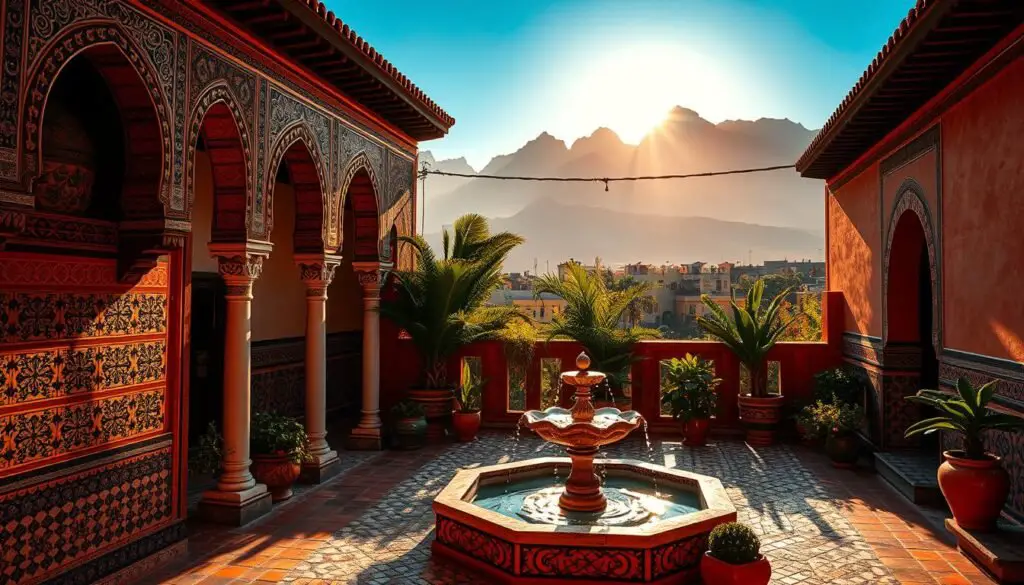
A Fusion of Berber, Arab, and Global Influences
Berber tribes, making up 40% of the population, laid the foundation with vibrant crafts and mountain dialects. Their traditions survive in handwoven rugs and clay-built kasbahs.
Arab influences arrived with Islamic conquests, bringing ornate mosques and calligraphy. Coastal towns like Essaouira reveal Portuguese arches, while Fez blends Andalusian music with local rhythms.
Languages and Identity: Darija, Tamazight, and Beyond
Morocco’s languages mirror its diversity. Darija (Arabic) dominates cities, while Tamazight thrives in rural areas. French bridges business and education, a colonial relic still in use today.
Efforts to preserve Tamazight include official recognition and school programs. From Saharan nomads to Rif Mountain villages, regional dialects keep cultures alive.
Timeless Architectural Wonders
From labyrinthine streets to towering minarets, Morocco’s architecture is a living history book. Each structure blends function and artistry, reflecting Berber ingenuity, Arab elegance, and global influences.
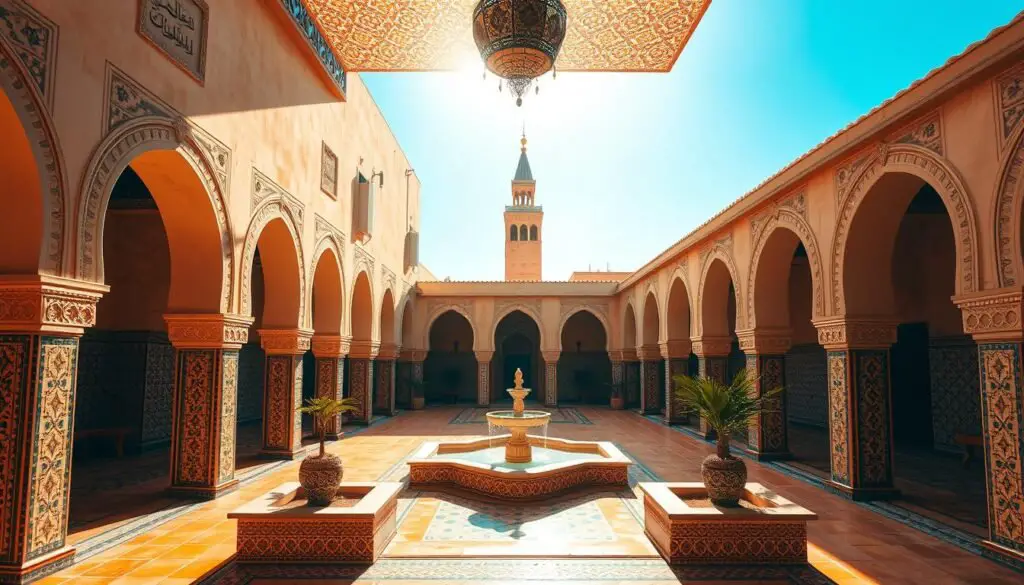
Fez’s medinas dazzle with communal fountains and hidden courtyards. The 12th-century Koutoubia Mosque in Marrakech stands tall with intricate zellige mosaics. These designs are passed down through generations, piece by tiny piece.
Casablanca’s Hassan II Mosque defies expectations. Its retractable roof and oceanfront location showcase modern ambition rooted in tradition. Locally sourced marble and hand-carved cedar ceilings reveal the pride in craftsmanship.
South of the Atlas Mountains, Aït Benhaddou’s earthen kasbahs rise like sandcastles. This UNESCO site starred in “Game of Thrones,” blending history with Hollywood. Nearby, Volubilis whispers Roman secrets through crumbling columns.
Preservation faces challenges as cities expand. Yet places like Essaouira balance Portuguese forts with Saharan ksour, proving heritage can thrive alongside progress.
A Symphony of Sounds: Morocco’s Musical Legacy
Rhythms pulse through Morocco’s streets, telling stories older than written history. Here, music is a living archive—preserving Berber chants, Andalusian orchestras, and Gnawa trance ceremonies. Each note echoes the country’s role as a crossroads of civilizations.
Gnawa, Andalusian, and Modern Fusion
Gnawa music traces its roots to Sub-Saharan Africa. Enslaved people brought hypnotic rhythms, now central to spiritual healing ceremonies. The guembri lute’s deep hum and qraqeb castanets guide participants into trance states.
Andalusian classical art thrives in Fez and Rabat. Centuries-old compositions, saved after Spain’s Reconquista, blend Arab poetry with orchestral precision. Today, riads host intimate performances under carved cedar ceilings.
Modern artists fuse traditions with electronic beats. Marrakech clubs mix Amazigh folk songs with synth loops, while female musicians break barriers in male-dominated genres. This diversity keeps the soundscape evolving.
Festivals That Bring Traditions to Life
The Essaouira Gnaoua World Music Festival draws half a million visitors yearly. For four days, the coastal town vibrates with collaborative concerts—Gnawa masters jam with jazz saxophonists under starry skies.
Fez’s Festival of World Sacred Music, UNESCO-recognized, transforms the city each June. Sufi chants, Gregorian hymns, and Tibetan bowls resonate in historic madrasas. Workshops explore how sound bridges faiths.
From handcrafted ouds to Berber Ahidous dances, Morocco’s melodies defy time. They’re not just heard—they’re felt, celebrated, and reborn in every generation.
Culinary Traditions: A Feast for the Senses
Every bite in Morocco tells a story—layers of flavors shaped by centuries of trade, tradition, and innovation. The cuisine reflects a mosaic of Berber resilience, Arab refinement, and global exchanges. Dishes are crafted to delight the senses, from aromatic spices to tender meat slow-cooked in clay pots.
From Tagine to Couscous: Iconic Dishes
A tagine isn’t just a meal; it’s a ritual. Chicken simmers with preserved lemons and olives, while lamb melts alongside prunes and almonds. The cone-shaped lid traps steam, infusing vegetables with rich, earthy notes.
Friday lunches revolve around couscous, steamed for three hours until fluffy. Families gather over plates topped with raisins, caramelized onions, and tender squash. In Marrakech’s Djemaa el-Fna, street vendors flip msemen pancakes, their crisp layers begging to be dipped in honey.
The Ritual of Mint Tea and Communal Dining
No act embodies hospitality like pouring mint tea from a silver pot. The higher the pour, the frothier the welcome. Fresh spearmint and gunpowder green tea mingle in a dance of sweetness and bite.
Meals are shared affairs. Hands wash from a brass urn before scooping couscous with the right hand. At sunset, Ramadan tables brim with harira soup, while summers call for meloui flatbreads drizzled with argan oil—a golden treasure pressed by Berber women.
Conclusion: Embracing Morocco’s Living Culture
Morocco’s timeless charm continues to evolve, blending ancient traditions with modern adventure. The 2020 Tourism Strategy aims for 18 million annual visitors, supported by infrastructure like the Al Boraq high-speed train and expanded airports.
Post-pandemic recovery hits 73%, with sustainability at the forefront. Responsible initiatives in the Draa Valley and Atlas Mountains protect local communities while welcoming travelers.
Respectful engagement matters—ask before photographing people, and dress modestly near mosques. For fresh journeys, try Dakhla’s kitesurfing or Tafraoute’s almond-blossom valleys.
HM Mohammed VI’s vision ensures Morocco remains a bridge between cultures. Whether chasing festivals in spring or hiking in autumn, every visit supports this vibrant destination.
FAQ
What makes Morocco’s culture unique?
The country blends Berber, Arab, and global influences, creating a rich mix of traditions, languages, and customs. This diversity is seen in its music, food, and architecture.
What languages are spoken in Morocco?
Darija (Moroccan Arabic) and Tamazight (Berber) are widely spoken. French and Spanish are also common due to historical ties.
What are some must-see architectural sites?
Highlights include the Hassan II Mosque in Casablanca, the ancient medinas of Fez and Marrakech, and the ksars (fortified villages) of the Sahara.
What types of music are popular in Morocco?
Gnawa, Andalusian, and modern fusion styles dominate. Festivals like the Fes Festival of World Sacred Music celebrate these sounds.
What are the most famous Moroccan dishes?
Tagine, couscous, and pastilla are iconic. Mint tea and communal dining are central to the food experience.
Do I need a visa to visit Morocco?
Many countries, including the U.S. and EU nations, enjoy visa-free entry for stays up to 90 days. Check requirements based on your nationality.
What’s the best time to visit?
Spring (March-May) and fall (September-November) offer pleasant weather. Summers can be hot, especially in the desert.
How do I explore the High Atlas Mountains?
Hiking, guided tours, and visits to Berber villages are popular. Toubkal, North Africa’s highest peak, attracts adventurers.